
Production animals
We provide veterinary care for cattle, calves, pigs, sheep, goats and other large animals, both through our mobile veterinary service and, in selected cases, through hospital admission. Hospital admission is by prior arrangement only and requires that the animal is fit for transport and can be handled safely.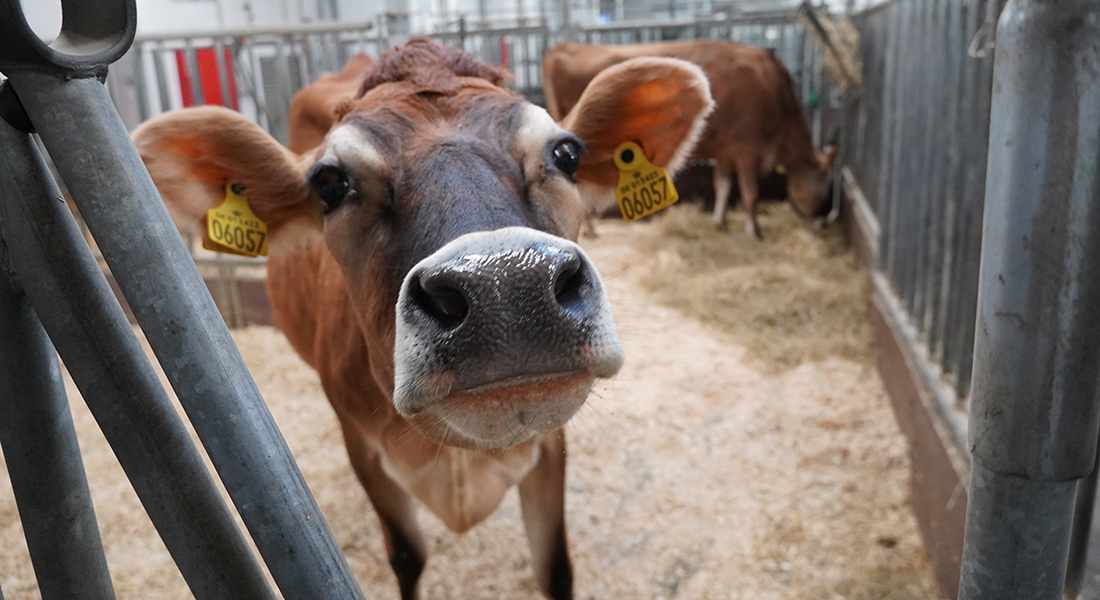
Livestock and Other Large Domestic Animals
At the Large Animal Teaching Hospital, we do not only treat horses. We also receive and care for livestock and other large domestic animals, including cattle, calves, pigs, sheep and goats.
As a university hospital, veterinary students are involved in the diagnostic evaluation and treatment of patients as part of their clinical training, but responsibility for each patient always remains with the hospital’s veterinarians. All treatment is delivered with a strong focus on the needs of the patient, animal welfare standards and practice-based education within a safe and professional environment.
By prior arrangement, we can admit livestock and other large animals for diagnostic evaluation, treatment and selected surgical procedures.
This may include:
- Cattle and calves
- Sheep and goats
- Pigs
- Small ruminants and llamas
All patients are assessed individually before admission to the hospital. At certain times, our ability to admit livestock patients may depend on clinical teaching activities and the hospital’s current capacity.
To ensure animal welfare and safety, certain requirements must always be met before a production animal can be transported and admitted to the hospital.
The animal must be assessed as fit for transport by a veterinarian before being transported to the hospital. This is necessary both to safeguard animal welfare and to comply with current regulations governing the transport of live animals. If an animal is not fit for transport, it must be treated or euthanised on site.
The animal must also be capable of being handled safely. This means that the animal - and, where relevant, any accompanying dam - must be manageable and able to be led by halter without posing a risk to staff, students or owners. We reserve the right to refuse admission or discharge animals that cannot be handled safely.
Admission of livestock patients is always by prior arrangement.
We recommend that owners or referring veterinarians contact the hospital before transporting an animal. This allows us to assess whether the patient is suitable for hospital admission, whether we have the appropriate facilities and capacity to receive the animal, and what practical preparations may be required.
When contacting the hospital, we will typically require the following information:
- Species, age and weight of the animal
- Ear tag or microchip number
- Nature and duration of the condition
- Whether the animal has been assessed as fit for transport
- Whether the animal can be handled safely
- Any previous treatment
- Expected time of arrival
The cost of treatment depends on the species of animal, the nature of the condition, the type of treatment provided, the length of hospitalisation, and the extent of procedures, medications and materials required.
For livestock patients that are not admitted as part of the clinical teaching programme, treatment is charged according to the current fee schedule. Fees reflect the hospital’s actual costs and are comparable to those charged for similar services in veterinary practice.
In certain cases, fixed standard fees may apply to selected patient groups and treatments. Please contact the hospital for a current fee estimate.
Certain treatments require individual assessment before a patient can be admitted to the hospital.
Caesarean Section in Cattle
In selected cases, we can admit cows for caesarean section when the animal is in active labour and is assessed as fit for transport and treatment at the hospital.
Cows that have been in labour for an extended period, or where complications are suspected, are assessed on a case-by-case basis in consultation with the referring veterinarian. In some situations, treatment or euthanasia on the farm may be the most appropriate option for the animal's welfare.
Urinary Calculi in Sheep and Goats
Urinary calculi (urolithiasis) in sheep and goats can be a complex and resource-intensive condition that often requires specialised treatment and prolonged hospitalisation. These patients are always assessed individually, and a cost estimate will be provided prior to admission.
Fractures
Fractures in livestock are assessed on a case-by-case basis. Admission depends on factors such as the size of the patient, prognosis, ease of handling, animal welfare considerations and the hospital’s current capacity.
Castration and Dehorning
Castration and dehorning may be performed by prior arrangement during selected periods of the year. As with all admissions, patients must be fit for transport and capable of being handled safely.
Discharge takes place once the animal has been assessed as fit for transport and the follow-up plan has been agreed with the owner or referring veterinarian.
As a general rule, medications are not supplied directly by the hospital. Owners may instead receive a prescription or make alternative arrangements in connection with discharge.
If you have any questions about the admission of livestock or other large animals, please do not hesitate to contact us.
Reception
Phone: +45 35 33 28 60
Email: universitetshospitalet@sund.ku.dk
Mobile Veterinary Service
Phone: +45 35 33 29 48
We encourage you to contact us before transporting an animal to the hospital so that we can assess the patient and discuss the most appropriate course of action.